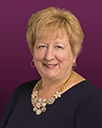
I am so thrilled to be at HIMSS16 this year with my newly formed Care Transformation team that includes fellow clinicians, Natalie Benner and Ruth Light. It was also a pleasure to speak in the Population Health Knowledge Center and converse with a number of the attendees afterwards. Having recently moved from a product strategy role at Caradigm to my new position as the VP of Care Transformation, I am excited to be able to collaborate with providers and customers about their population health strategies even more this year. We all know population health requires more than just new technology solutions. The team of clinicians delivering care and how they deliver that care has to evolve as well. What makes it challenging for providers is that there’s no single “right” way to do it. Caradigm’s Care Transformation team was formed to help organizations find their optimal approach given their goals, strategies and resources. Below are a few questions that can be helpful to think about if you are interested in care transformation.
Who should be added to the care team?
As I alluded to above, there are many different ways to set up your care teams depending on your particular area of focus. Some providers partner closely with primary care physician groups and will share resources such as a social worker, behavioral health counselor or a non-clinical admin that helps clinicians work “top of license”. Others may focus on designing care transition teams that ensure effective handoffs between care settings. Community-based services such as transportation can also be a highly effective addition to care teams that can drive immediate results. Providers have had success reducing unnecessary ambulance and ED utilization for non-emergency situations simply by providing access to a taxi service.
How do we align different workflows?
It’s critical to think about care pathways as an end-to-end process. Ask yourself “How do they connect?” “How can we make processes consistent between them?” “How do we remain patient-centric?” After providers take initial steps in population health, often the next step in their journey is to map and align different workflows and teams. Providers need aligned goals, metrics and protocols across the spectrum. Silos between teams need to be removed to enable an efficient patient-centered approach to care.
Can we support different care settings?
Being able to provide effective care in different settings is also critical because patients often move between them (e.g. acute to post-acute, ambulatory to assisted living). For patients with no regular caregiver support, care may be best delivered in a long-term care or skilled nursing facility for which providers must have a plan. For other patients, a medical home with embedded services such as behavioral health and access to community-based services may be the right fit. Effective handoffs between care settings must be established to avoid gaps and lapses in access to services. Being able to communicate and share a plan of care across an interdisciplinary team is also essential for complex patients.
How do we connect with the patient?
Every clinician that I speak with agrees that patient engagement is vital to improving health outcomes, but also agrees that it is extremely difficult. Even contacting a patient can be challenging because providers often have outdated contact info. In order to scale population health programs, providers need their patients to have “skin in the game” and participate in their own care. Providers might be able to create a registry of the most expensive patients, but it’s just as important to find out why they are the most expensive. For example, are they not taking their medications because they don’t have transportation, can’t afford them or are they confused by the different medications that have been prescribed by multiple specialists? Motivating patients and changing behavior is not easy, but it’s important to think about how it fits into the care team’s responsibilities and workflows.
How can technology help?
Coordinating care across the continuum is difficult because legacy health IT infrastructure was not designed to support risk-based care approaches. When I ask clinicians what do they need technology to help with, I hear a lot of common responses. They wish they had access to real-time lab info because while claims data is great, it is dated. Others tell me they wish they had integrated EMRs. They wish all providers could be connected so that everyone can have a true encounter and care summary even if it was out-of-network. Did a patient get admitted? Did a patient get discharged? Scaling population health according to patient risk-level is also another core challenge where technology can be extremely helpful, which is a topic that I’ll cover more in a future blog post. The truth is technology can help in a lot of areas, but how you sequence and scale that investment will depend on your particular organization.
These are the types of questions that I am so excited to help providers tackle this year. The Care Transformation team is in the Caradigm Booth #5427 this week at HIMSS having discussions with providers. If you miss us at HIMSS, you can reach out to us after by leaving a note here.
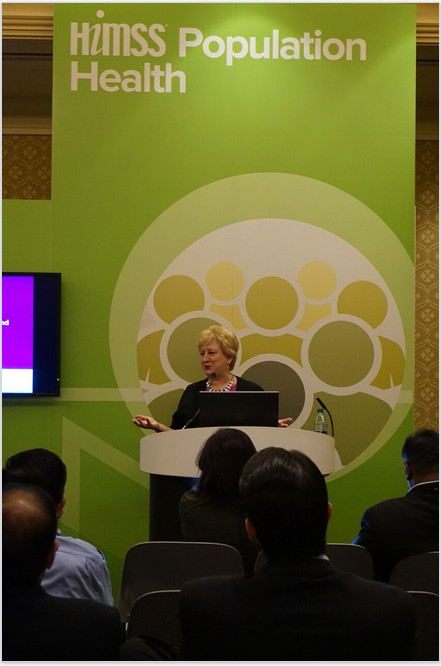
It was an enjoyable experience presenting in the Population Health Knowledge Center